Tag Archives: Gx

Tales from the Trenches – Gx over Gy?

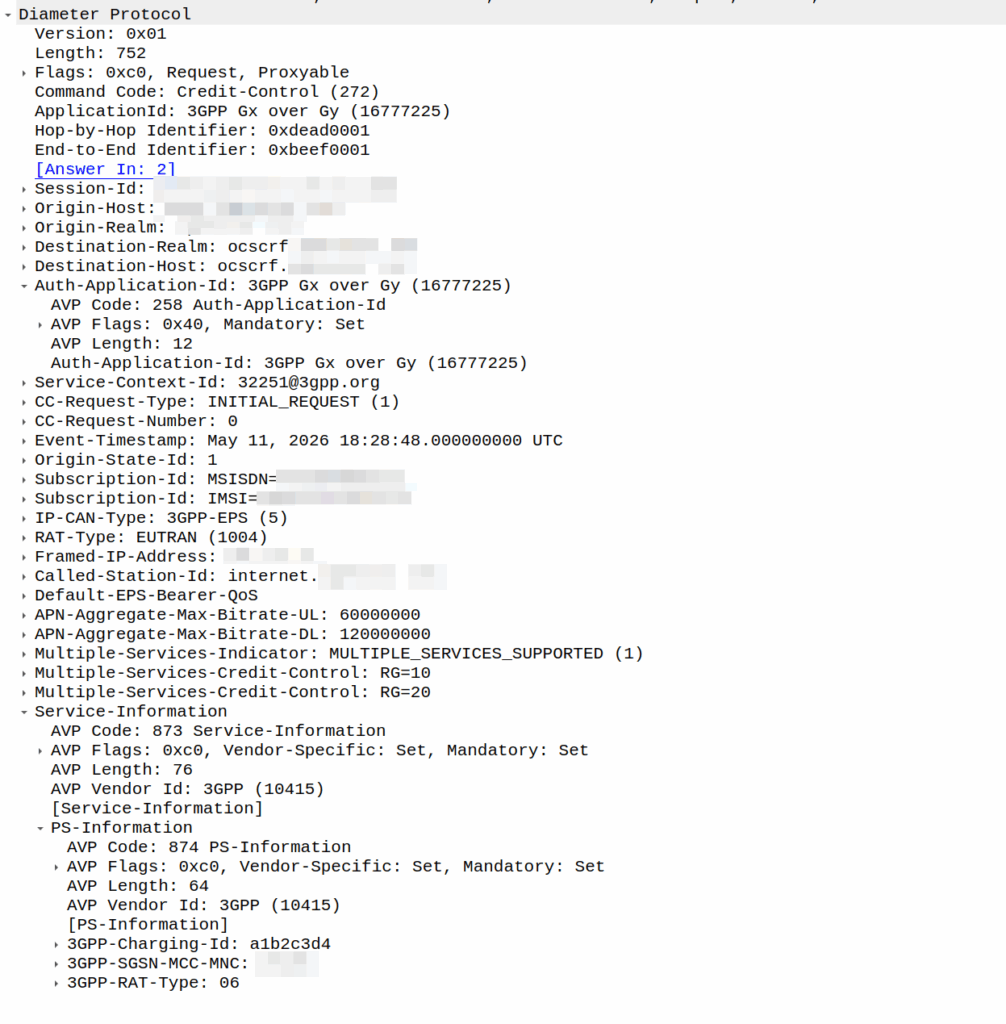
I was recently asked by a potential customer if we supported Gx over Gy.

I’d never heard of this before, so I gave my standard “If it’s in the spec we should support it, but I’ll check” answer, and got them to send me a PCAP, which I’ve got.

This is weird.

So for starers, Protocoldex has nothing for this application ID (16777225), even though it has all the LTE diameter specs.
My starting point was TS 29.230 TS Diameter applications; 3GPP specific codes and identifiers which acknowledged the existence of “Gx over Gy” with IANA code 16777225 and pointed me to TS 29.210 which is a 3G spec (which is not a LTE / 4G spec).
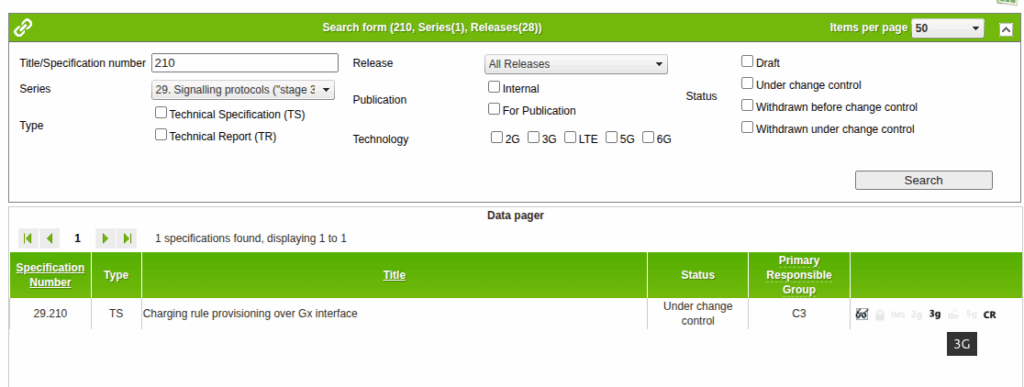
Notice the 3G logo only

The last version was from 2006, in 3GPP release 6, which is two years before LTE was standardized in Release 8. The word LTE does not appear in the doc or in the metadata tags.

It speaks of TPF (Traffic Plane Function) and TPF (Charging Rules Function).

LTE is “Long Term Evolution” – In later releases this draft TPF would evolve into the PGW (before the PGW-C / PGW-U divorce) and the TPF would go on to become the PCRF (and save spring break).

Reading through these early specs is like looking at Homo Eructs (get your mind out of the gutter) and knowing it evolves into Homo Sapiens.

So what does Gx over Gy do? Well, the concept is pretty straightforward, rather than needing a Sy interface between the PCRF and OCS, you can provision policy rules from the OCS, rather than on the PCRF.

Of course, you could never run VoLTE on this (the P-CSCF needs the Rx interface to the PCRF to provision dedicated bearers and the PCRF provisions those over TFTs over Gx interface).

So what network functions should implement this standard? Well, the P-GW specs do not reference this as something that’s included in the P-GW, nor is it in the GGSN – This was a “gooch” spec between the hypothetical standards land and real world implementations.

So will we be implementing it? Probably not. But an interesting bit of archaeology and a look through the genealogy of 3GPP.
TFTs & Create Bearer Requests

What is included in the Charging Rule on Gx ultimately turns into a Create Bearer Request on GTPv2-C.

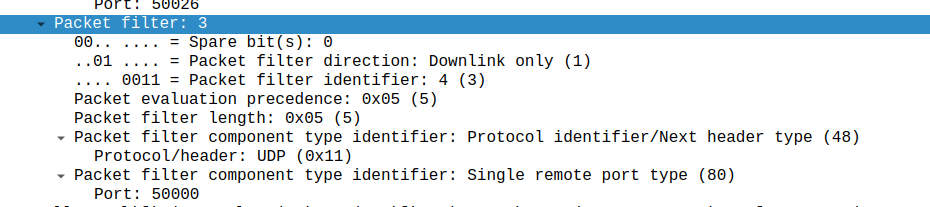
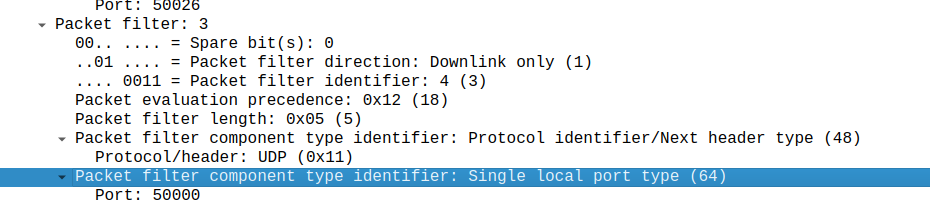
But the mapping it’s always obvious, today I got stuck on the difference between a Single remote port type, and a single local port type, thinking that the Packet Filter Direction in the TFT controlled this – It doesn’t – It’s controlled by the order of your Traffic Flow Template rule.

Input TFT:

"permit out 17 from any 50000 to any"

Leads to Packet filter component type identifier: Single remote port type

Whereas a TFT of:

permit out 17 from any to any 50000

Leads to Packet filter component type identifier: Single local port type (64)

Lifecycle of a Dedicated Bearer – From Flow-Description AVP to Traffic Flow Templates

To support Dedicated Bearers we first have to have a way of profiling the traffic, to classify the traffic as being the type we want to provide the Dedicated Bearer for.

The first step involves a request from an Application Function (AF) to the PCRF via the Rx interface.

The most common type of AF would be a P-CSCF. When a VoLTE call gets setup the P-CSCF requests that a dedicated bearer be setup for the IP Address and Ports involved in the VoLTE call, to ensure users get the best possible call quality.

But Application Functions aren’t limited to just VoLTE – You could also embed an Application Function into the server for an online game to enable a dedicated bearer for users playing that game, or a sports streaming app that detects when a user starts streaming sports and creates a dedicated bearer for that user to send the traffic down.

The request to setup a dedicated bearer comes in the form of a Diameter request message from the AF, using the Rx reference point, typically from the P-CSCF to the PCRF in the network in an “AA-Request”.

Of main interest in the AA-Request is the Media Component AVP, that contains all the details needed to identify the traffic flow.

Now our PCRF is in charge of policy, and know which P-GW is serving the required subscriber. So the PCRF takes this information and sends a Gx Re-Auth Request to the PCEF in the P-GW serving the subscriber, with a Charging Rule the PCEF in the P-GW needs to install, to profile and apply QoS to the bearer.

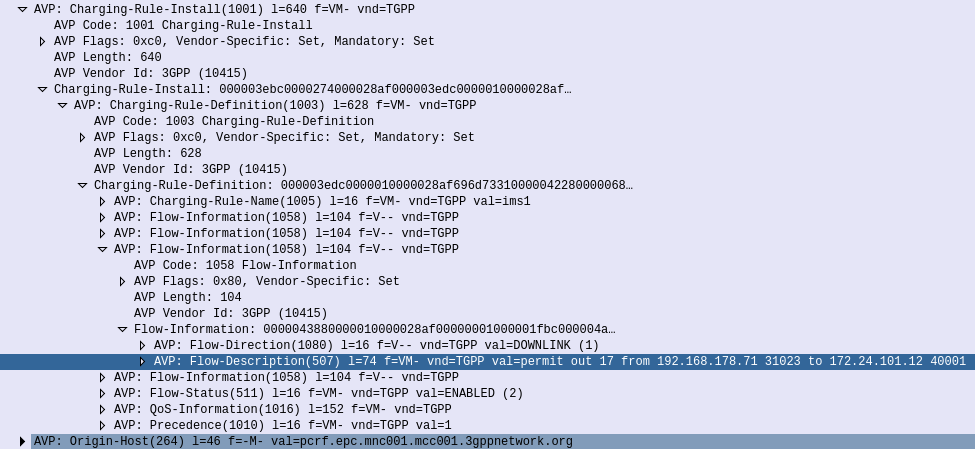
So within the Gx Re-Auth Request is the Charging-Rule Definition, made up of Flow-Description AVP which I’ve written about here, that is used to identify and profile traffic flows and QoS parameters to apply to matching traffic.

Charging Rule Definition’s Flow-Information AVPs showing the information needed to profile the traffic

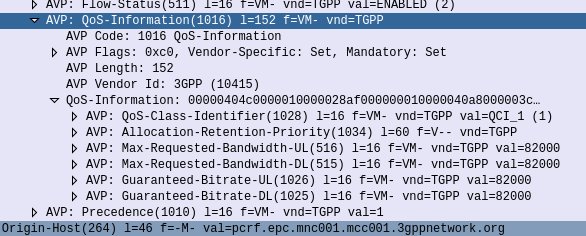
The QoS Description AVP defines which QoS parameters (QCI / ARP / Guaranteed & Maximum Bandwidth) should be applied to the traffic that matches the rules we just defined.

QoS information AVP
QoS Information AVP showing requested QoS Parameters

The P-GW sends back a Gx Re-Auth Answer, and gets to work actually setting up these bearers.

With the rule installed on the PCEF, it’s time to get this new bearer set up on the UE / eNodeB.

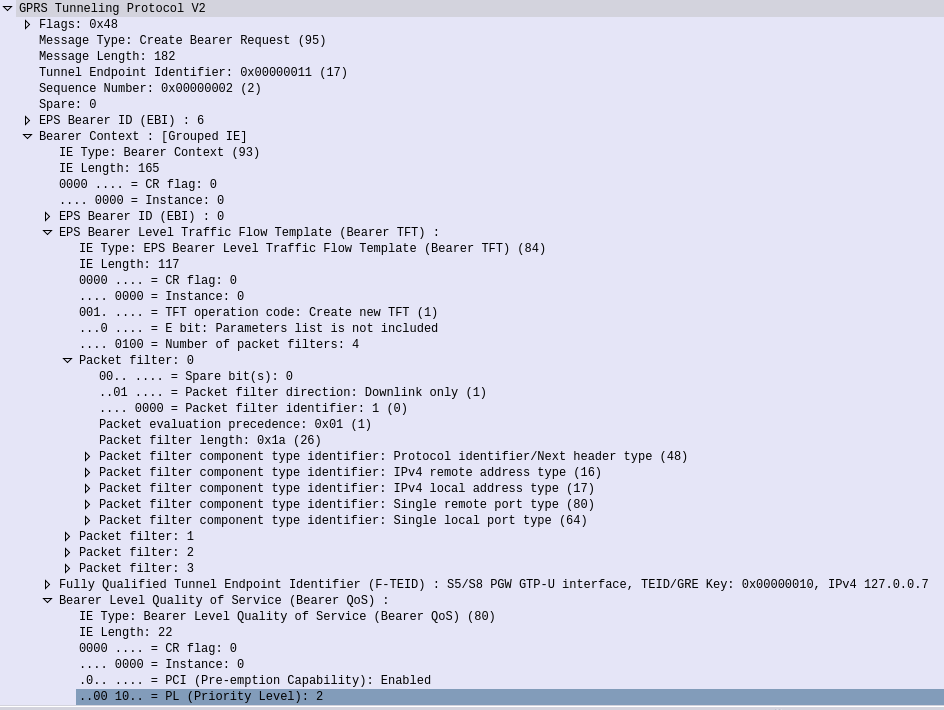
The P-GW sends a GTPv2 “Create Bearer Request” to the S-GW which forwards it onto the MME, to setup / define the Dedicated Bearer to be setup on the eNodeB.

GTPv2 “Create Bearer Request” sent by the P-Gw to the S-GW forwarded from the S-GW to the MME

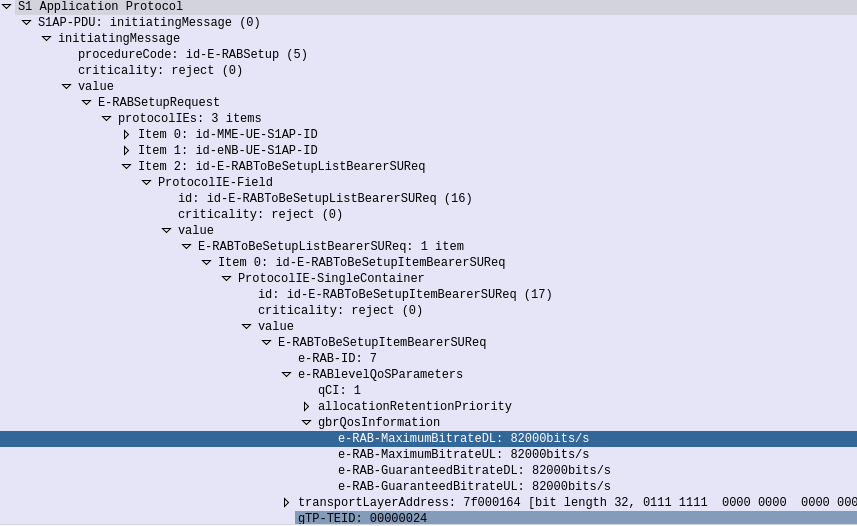
The MME translates this into an S1 “E-RAB Setup Request” which it sends to the eNodeB to setup,

S1 E-RAB Setup request showing the E-RAB to be setup

Assuming the eNodeB has the resources to setup this bearer, it provides the details to the UE and sets up the bearer, sending confirmation back to the MME in the S1 “E-RAB Setup Response” message, which the MME translates back into GTPv2 for a “Create Bearer Response”

All this effort to keep your VoLTE calls sounding great!